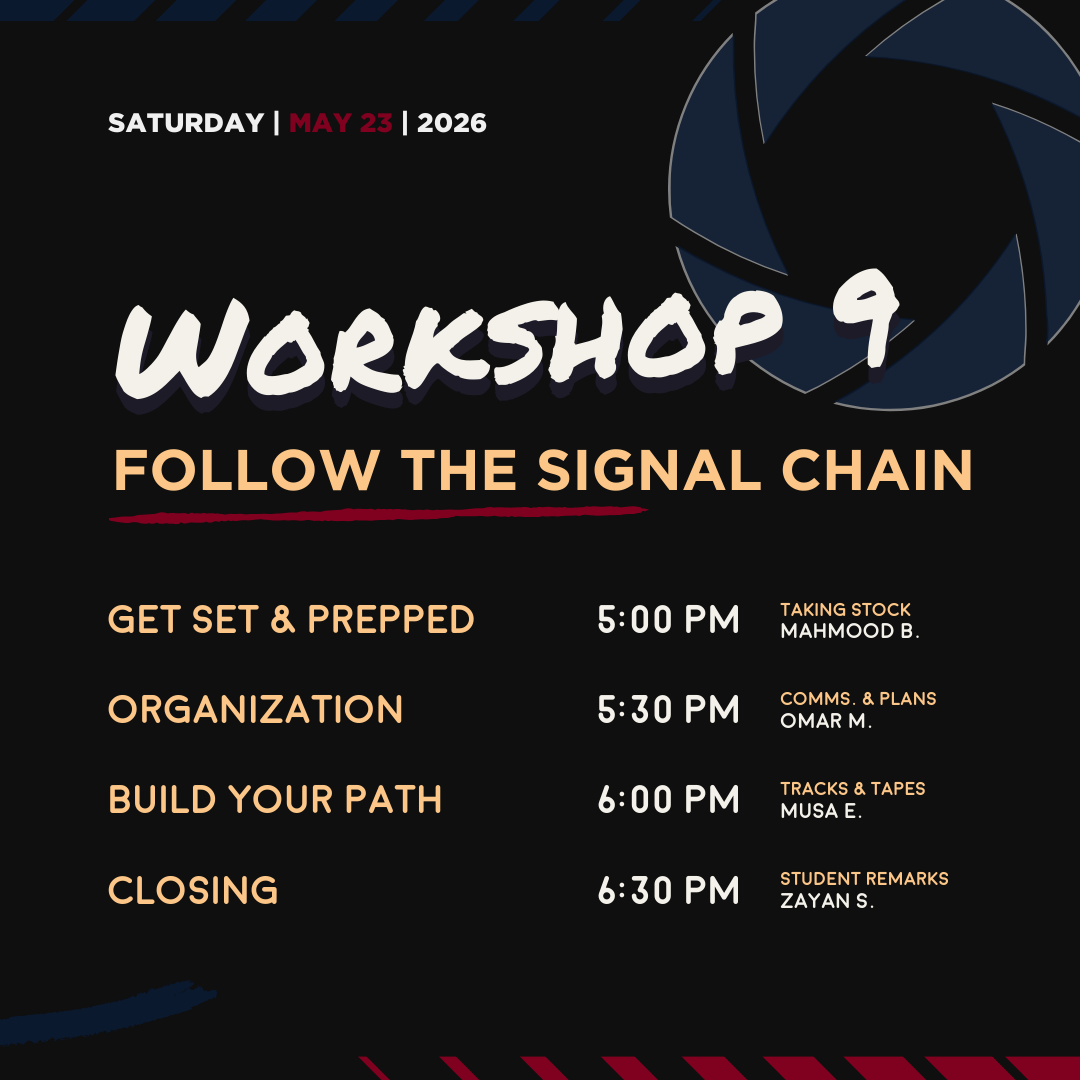
Workshop #9: Follow the Signal Chain
Chaos is the enemy of creativity on a film set. Understanding the "signal chain"—the technical workflow from prep to tracks and tapes—ensures that technical glitches don't derail the artistic vision. A well-organized set with clear communication channels buys you the time and mental space necessary for spontaneity and creative breakthroughs.
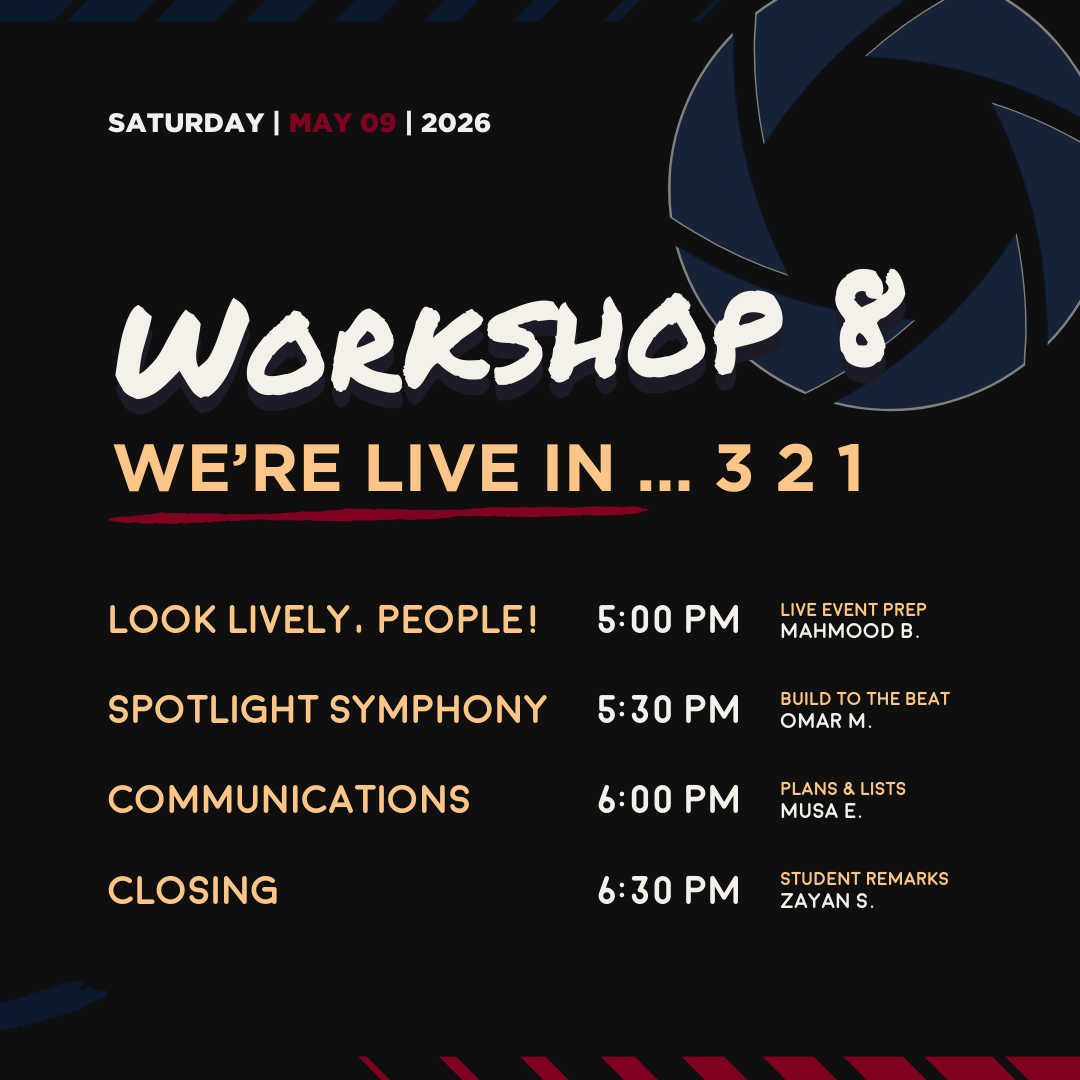
Workshop #8: We’re Live In … 3 2 1
Live production is filmmaking without a safety net. It demands intense focus, rapid decision-making, and flawless communication. In a live environment, you don't get second takes; you have to identify the story as it is happening and capture it immediately. This trains you to possess the ultimate discipline required for high-stakes narrative filmmaking.
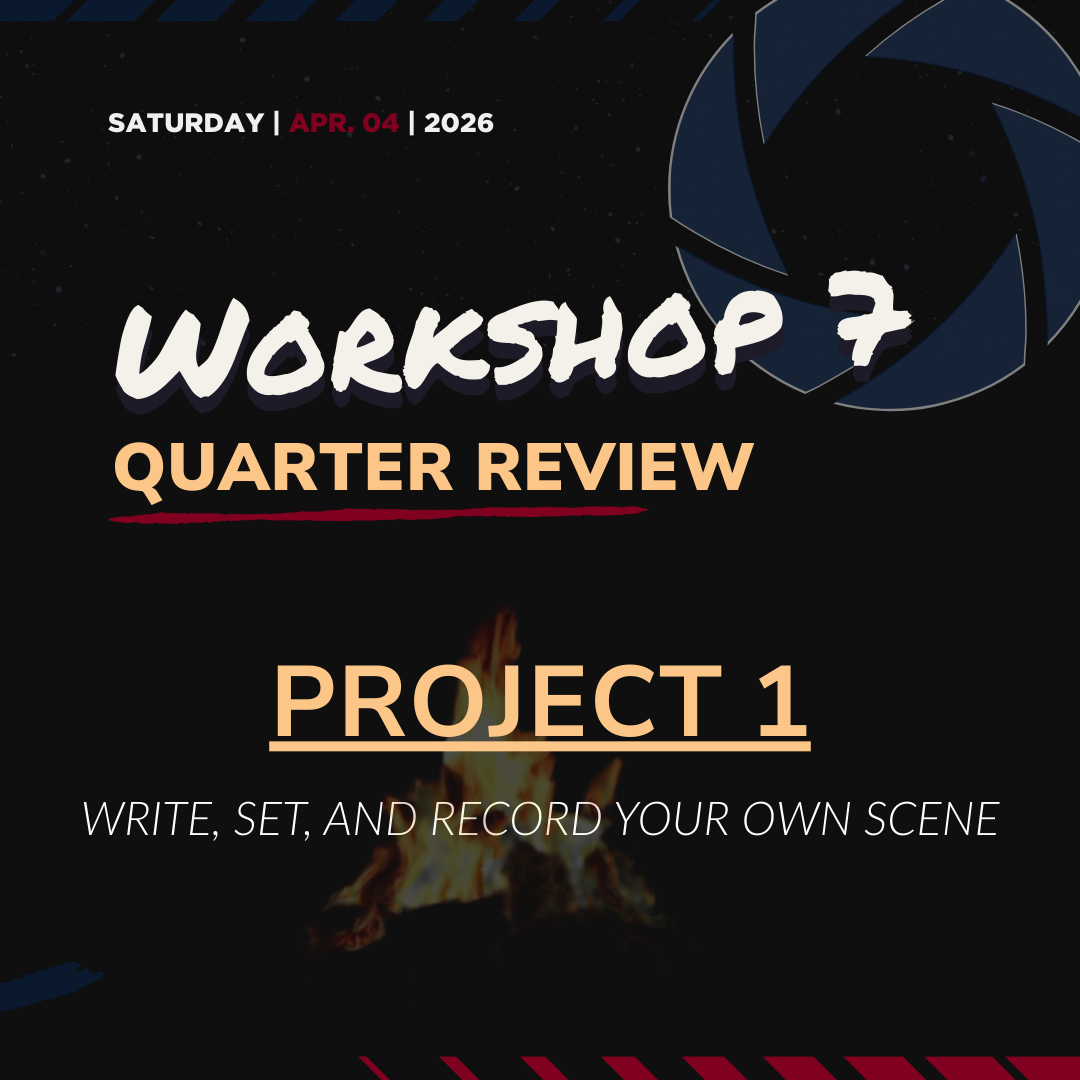
Workshop #7: Write, Set, & Record Your Own Scene
Knowing the theory is one thing; applying it to create something from scratch is another. This workshop is the essential bridge between learning individual technical skills and actual filmmaking.
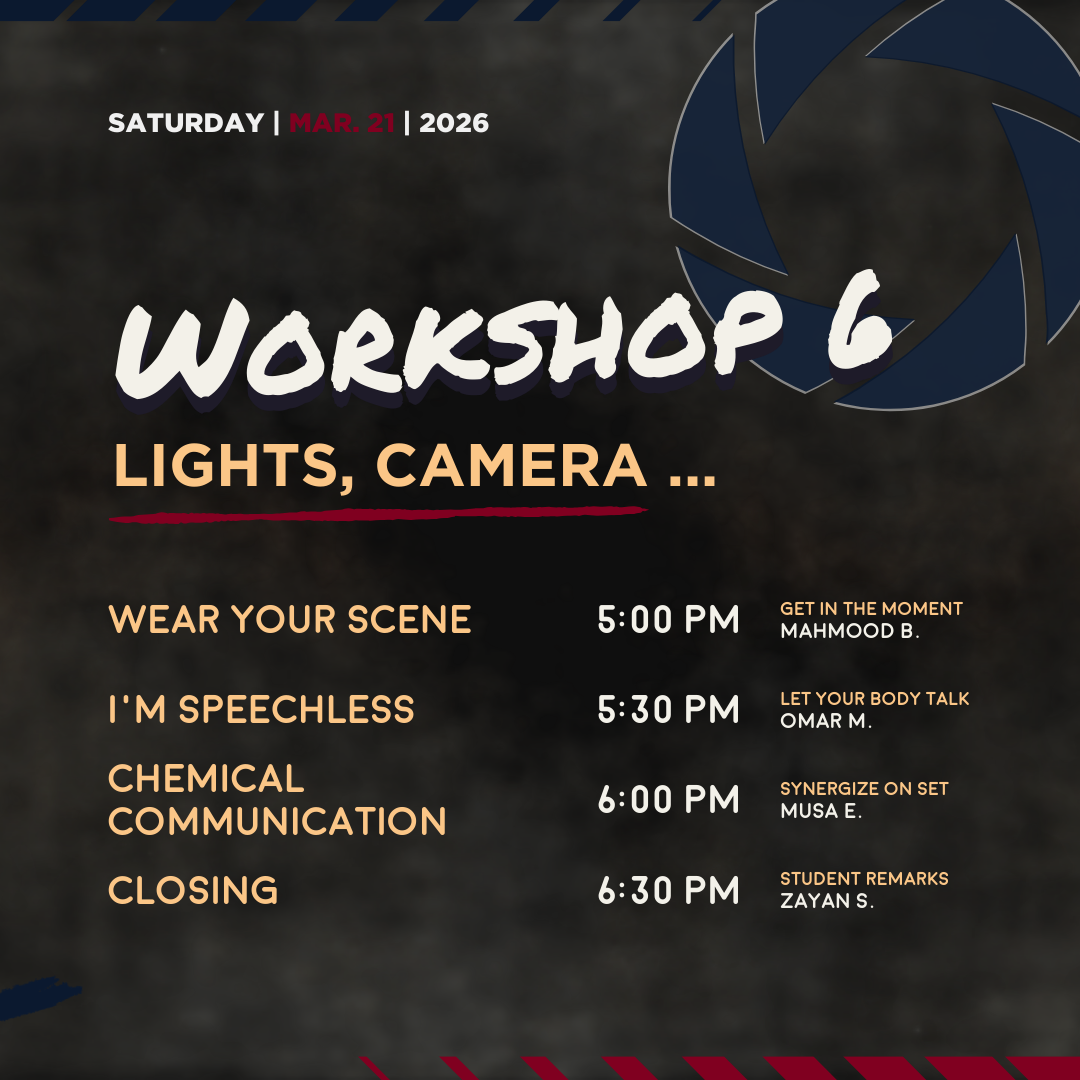
Workshop #6: Lights, Camera...
All the technical wizardry in the world means nothing if the performance falls flat. This workshop bridges the gap between the tech crew and the talent. Learning to communicate non-verbally and creating synergy on set allows you to create a safe space for actors to be vulnerable. Your job is to capture authentic human emotion in the brief moments between "Action" and "Cut."
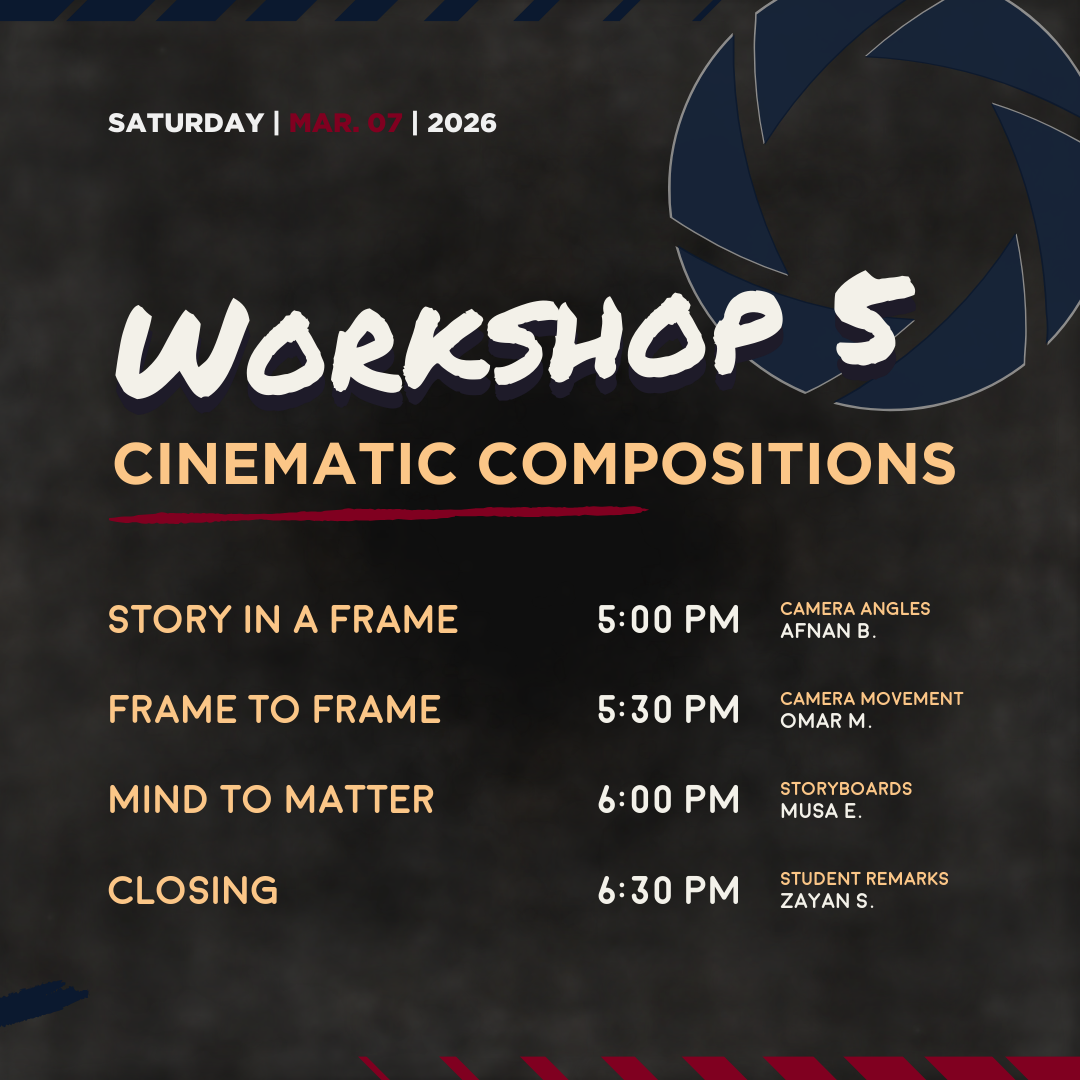
Workshop #5: Cinematic Compositions
Where you place the camera and how you move it forms the grammatical structure of visual storytelling. Composition dictates power dynamics, isolation, connection, and energy. Moving from "story in a frame" to storyboarding ensures that every angle serves a narrative purpose, transforming arbitrary shots into a cohesive, impactful sequence.
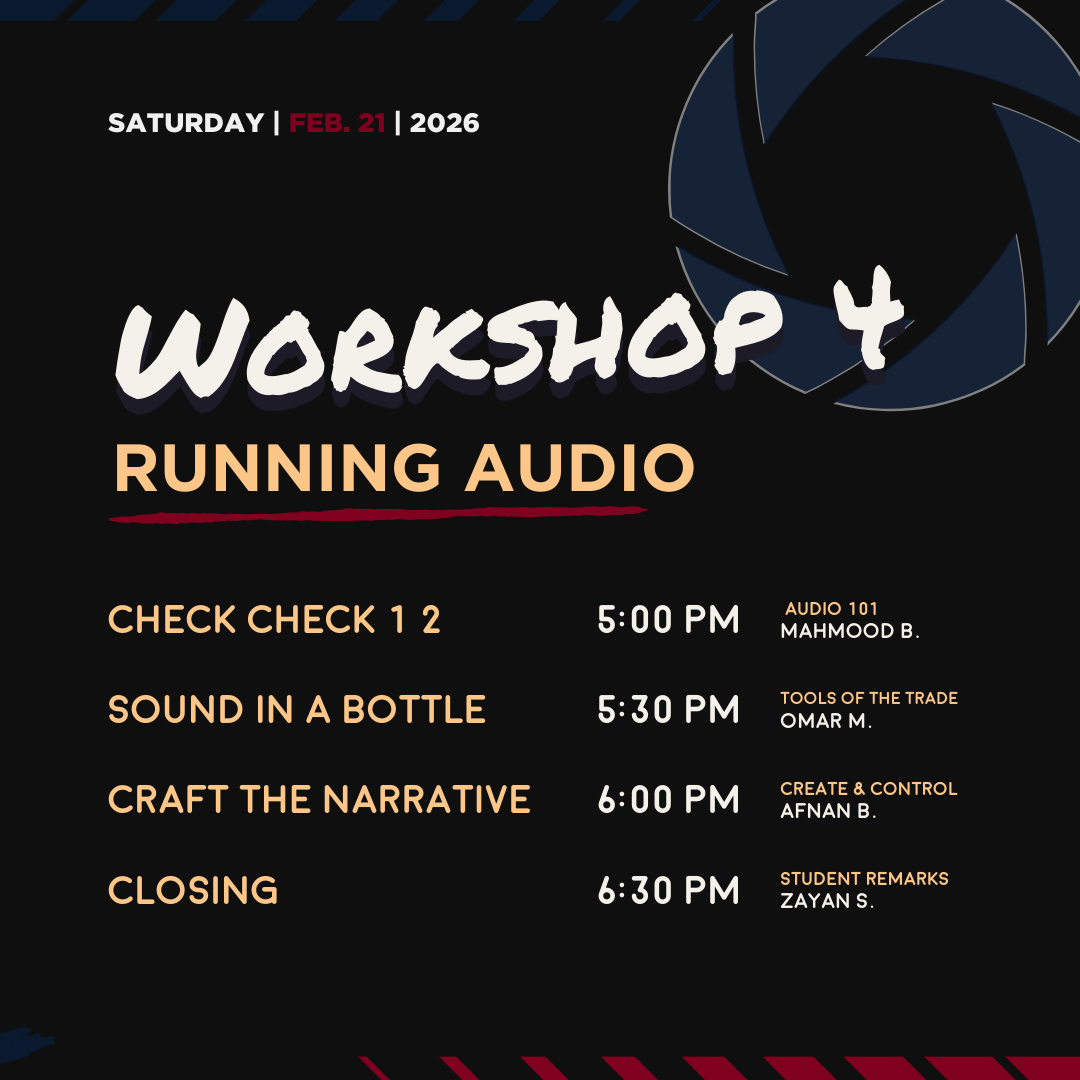
Workshop #4: Running Audio
There is an old adage in film: "Sound is half the picture." Audiences will forgive grainy footage, but bad audio breaks the immersion instantly. Capturing clean dialogue and crafting a layered soundscape grounds your story in reality and subconsciously guides the audience’s emotional response. If they can't hear it clearly, they can't feel it deeply.
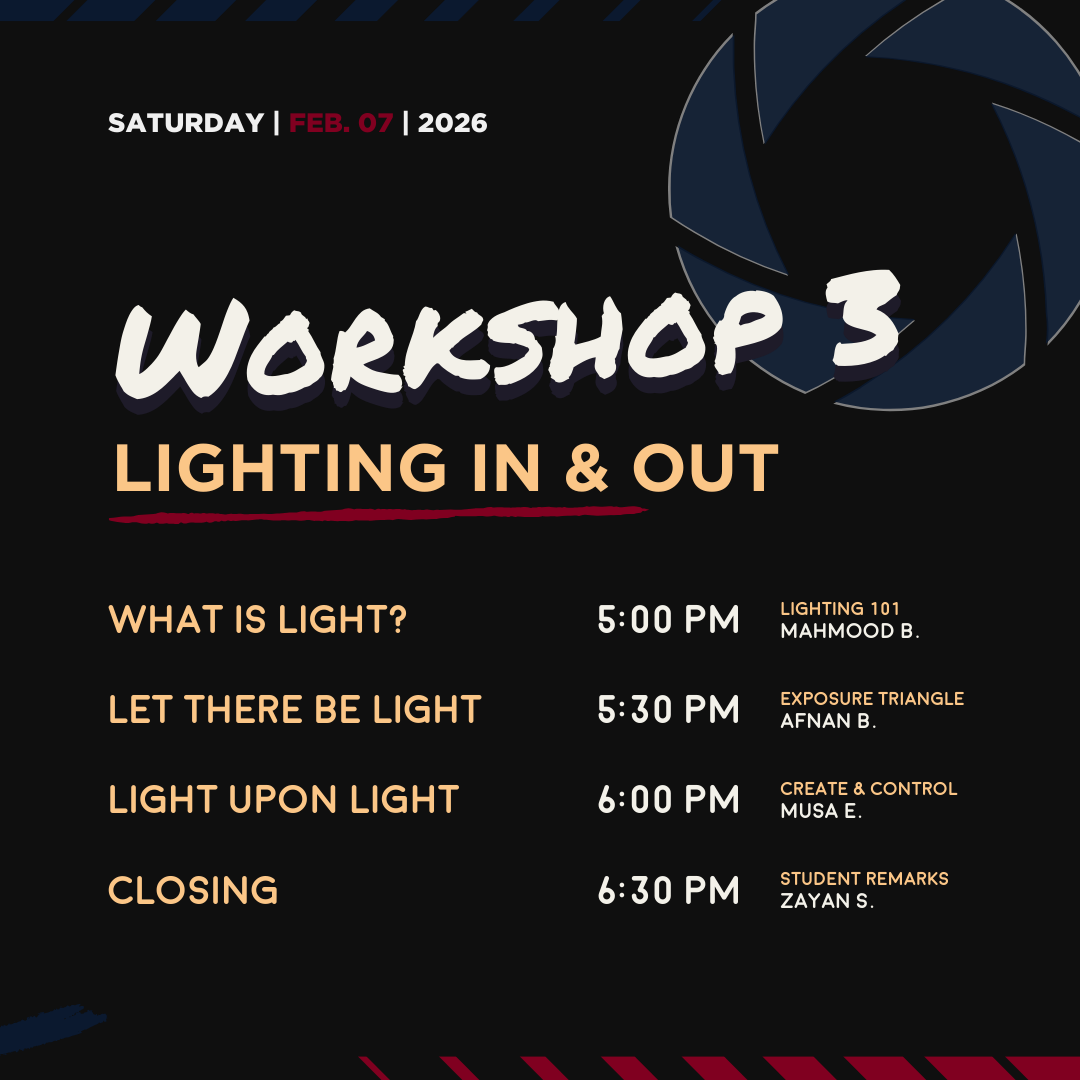
Workshop #3: Lighting in & out
Lighting is the art of painting with light and shadow. It is perhaps the single most important factor in establishing mood and atmosphere.
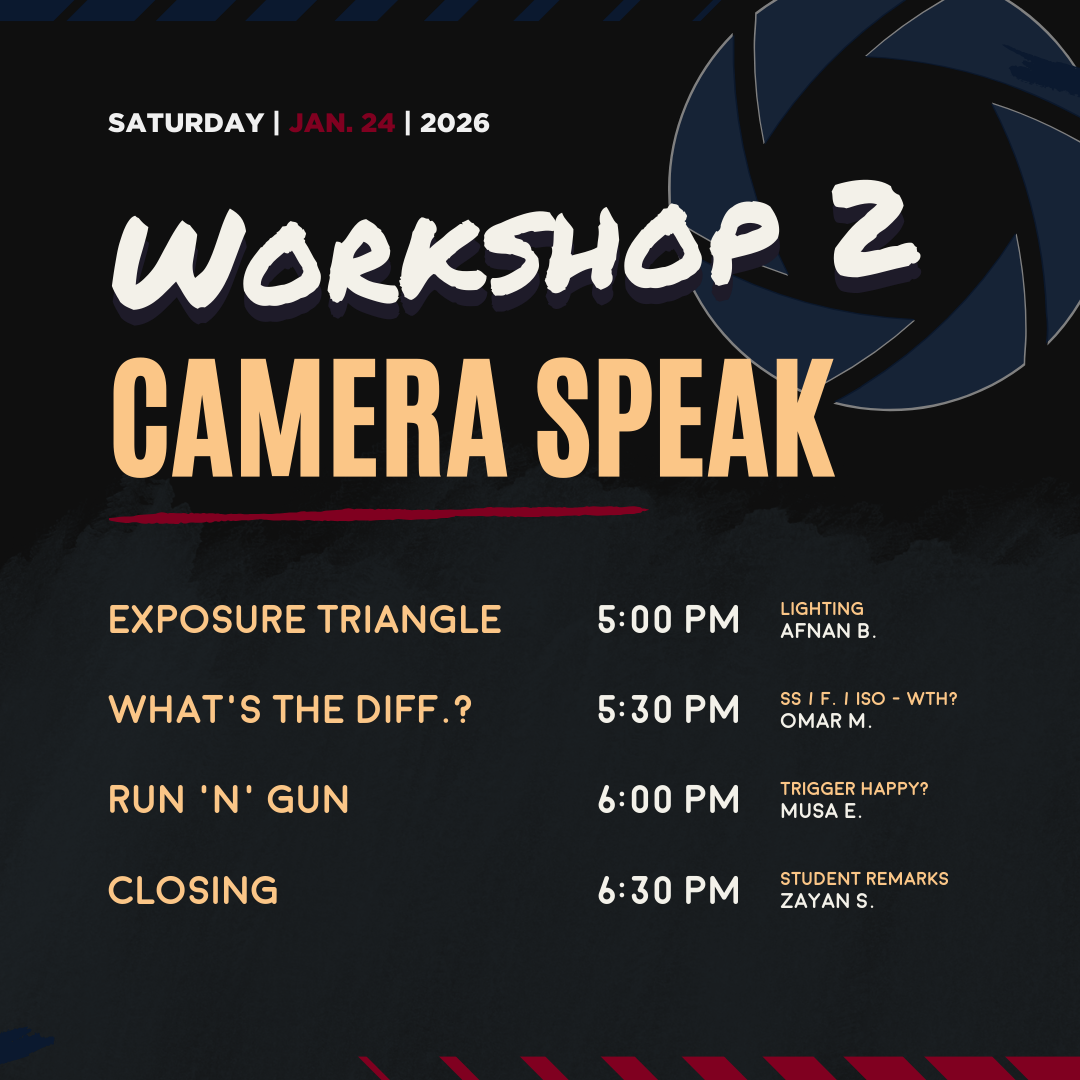
Workshop #2: Camera Speak
The exposure triangle—shutter speed, aperture, and ISO—aren't just numbers; they are emotional dials. A frantic action scene requires different settings than a somber, intimate confession. By mastering "camera speak," you learn to manipulate the sensor to capture not just an image, but a feeling, ensuring the technical specs match the script’s emotional beat.
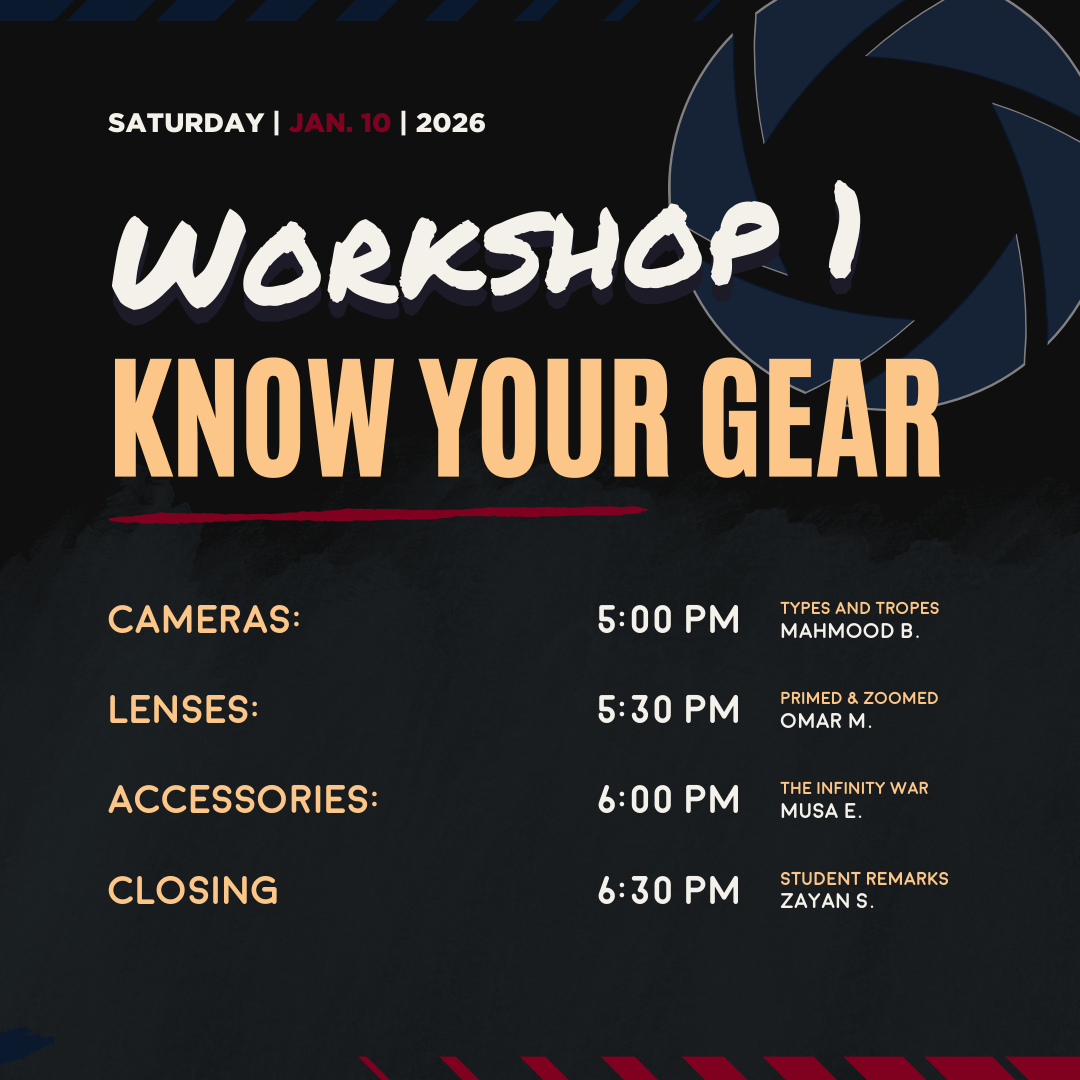
Workshop #1: Know Your Gear
You cannot effectively tell a story if you are fighting your equipment. Mastering cameras, understanding the specific psychological impact of different lenses, and knowing the right accessories aren't just technical hurdles—they are the choices that define your film's visual language. When you know your gear intuitively, equipment stops being an obstacle and starts being an extension of your creative vision.
STUDENT SHOWCASE